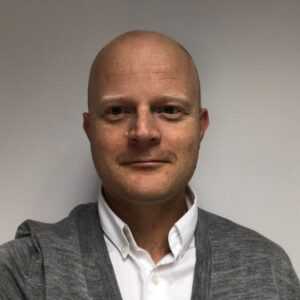
The Impact Files Podcast – Darren Aston, Managing Director, Aston & James
Ned: Welcome to another episode of The Impact Files podcast, and in this episode, we are delighted to be joined by Darren Aston, MD and owner of Aston & James. Darren, welcome to the podcast.
Darren: Thank you. Good afternoon, thank you for having me.
Ned: Really nice to have you here. Let’s start off, then, with an introduction to yourself, to Aston & James, and to the work that you do.
Darren: Thank you. So yes, my name is Darren Aston, as you said. I’m the MD and owner of a family business. We’re now 35 years old, just in June 2025. I work with a number of my siblings. I’m one of eight.
And, yeah, I was born into the business at a very young age of 17, straight out of sixth form, working with my brother, who’d had 8 years of forming the business, Aston & James, with a gentleman with the surname James. But he left very early on, so it was very much Aston Office Supplies, but due to the nature of branding and recognising the name, Alan, my brother, kept the name as Aston & James at the time.
And I became a sort of young apprentice under his wing, under his guidance, and developed my knowledge of office supplies, which was pretty much what I was entering into at that time. And, yeah, I grew my knowledge of products and supply chain, and sort of responsibly supported Alan to try and grow the business and make a bit of a difference within the family.
And, yeah, many, many years on, probably a lot of water under the bridge, but I took on the business from him in April 2012 to take it forward, with the help of my other brothers and sisters, who support me as a sort of senior leadership team, and five, six other members of the team that have now been here over 25 years.
Ned: Wow. I’m intrigued that you’re such a family-orientated family business. So, can I ask you, which of your siblings are involved?
Darren: Yes, so I was baby number four. Alan was the eldest. There were two daughters that were older. One has been within the business in the past, and came on as a workwear and branded goods manager, did five years in the business, and then went back to childcare work.
And my younger sister, so child number 5, my sister Cheryl, she’s our business development director. My younger brother, number 6, Craig, he’s our furniture director and logistics manager. Well, furniture and logistics director, sorry, promoted. And then the baby of the bunch, number 8, she now heads up our workwear and branded goods department. And Gavin, number 7, who I missed, did work for us for a period of time and went on to pastures new. So, yeah, out of 8 siblings, 6 of us have worked in the business at any one time.
Ned: That’s fantastic. And, I mean, in terms of a sort of simple description of what the business does?
Darren: Yeah, very simply, we help organisations make their workplaces work. We had to reimagine ourselves, really, post-COVID, and although we’ve been going for 35 years, in the last 5 years it feels like we’re a new business. It almost feels like a startup all over again. New normals, new conditions, new requirements, and, yeah, as a business, we’ve had to innovate or evaporate. And I’m very proud of the things that we’ve done over the last few years to try and make a difference in multiple ways.
Ned: And you’re working across quite a broad range of products. Looking at the website now, there’s furniture, branded goods, stationery, etc, etc.
Darren: Yes, our strapline is “everything for the workplace”, and we mean that. We sort of wear it on our chests with pride. We do what we say, and we say what we do, in terms of trying to help streamline the procurement of our customers’ businesses by helping them with anything that they require for their workplace. So the value proposition is to be an extension of their business and offer a tailored workplace solution, but with a personal touch.
Ned: And in terms of your customers, how large are you as a business, and are there any well-known brand names that you work for?
Darren: Yeah, we work with lots of different verticals. Education’s been an area that we’ve been strong in, from our origins of office supplies and paper. And then we work with contracting businesses, such as the likes of Darke & Taylor, a big apprenticeship business based in Long Hanborough, Oxfordshire. They have very similar values, and we know the senior leadership team very well there. We help them with their workwear, with their furniture, and that spun off into more warehouse, should we say, facilities-type supplies.
If I do a quick sense check on the numbers, I think we’ve got 181 customers in manufacturing and 86 in construction. So that for us is quite an aligned area for the types of products and services that we’re offering customers, with PPE, workwear, ergonomics, and pretty much anything that supports their team.
Ned: And are there any stats that you can share with us about how large Aston & James is as a business, in terms of numbers?
Darren: Yeah, for number of employees, we’re 15. And out of that 15, 7 or 8 of us have done over 25 years, and a couple are coming up for 20. So, yeah, probably two-thirds of the team are well into 20 years plus, supporting us in our journey and in our changing world.
And by the turn of December this year, we will be just about £2.8 million for the calendar year.
Ned: That’s a very satisfying number. Fantastic. That’s a really interesting introduction. Thank you so much, Darren. I’m going to hand over to Ruth.
Ruth: Thanks, Ned. Super interesting to hear about the business, Darren, thank you. I think what’s interesting is, in all of that intro, it kind of alludes to the fact that you’re a responsible business and you’re well on your way, but obviously some people might think office supplies and not necessarily think sustainability. So, what’s the story behind Aston & James being a responsible business? And I guess, what’s the business case for you and your team as well?
Darren: Yeah, a key thing for us, since we’ve had to do a bit of a re-evaluation of our audience and the wants and needs of those customers, and aligning to that… you know, two ears, one mouth, listening and learning from the post-COVID workplace requirement, people working remotely, people wanting different products and services. So we looked at it as trying to make a difference, looking at it in different ways: sustainability, innovative, less wasteful, more charitable.
We try to live and breathe those elements through eco-delivery days. One thing that we learned, reflectively, during the COVID time was that customers needed certain things urgently, but then, as workplaces didn’t have the occupancy that they once had, the urgency level on some of the standard workplace supplies and office supplies wasn’t a next-day requirement. So we worked with business parks to reduce the number of vans that were delivering into those areas, by talking to them about eco-delivery days. And that’s something that’s evolved over the last two, three years, and now we’ve embedded that as a sort of default, rather than next day: must panic, must deliver, has to go.
So that’s helped us on both sides of the equation, from the point of view of supply chain management, delivery, emissions, touchpoints. And it’s helped our customers coordinate what they want in less frequent, bigger orders, which is reflectively better for us in order averages and things like that. So we’re seeing an increase in that.
And then, again, through product awareness, we try to communicate transparency about what is available. There was a case of concern around greenwashing with product listings two years ago, two and a half years ago, so we took it upon ourselves as a business to go through our 20,000-plus office product lines, look at the data that was there, get support and ask the questions: which products were what we would call an A&J-approved product? So then we launched our own page with a shortlist of products that we felt our customers were asking for more often, but our team needed to have that information available to them to make them more efficient in suggestions. And then we put a fair statement page up, with some Aston & James positioning: that these are products that we want to put a spotlight on because of their origins of source or type. Are they recyclable? Are they biodegradable? Yeah, the various elements of that A&J approval that are available on our website to view and understand. And we’ve bolstered that now. I think we might be at something like 5,000 products now. We started off at a modest 800 lines. So, yeah, it’s grown.
Ned: I’m really interested to know, Darren, where does this desire to be sustainable come from? What’s in my head is, it sounds as if it’s very much an important value to yourself, rather than being driven by the market and you responding to the market. And I guess that makes me think, is this desire a family thing? Have you had complicated discussions with your siblings going, “Yes, no, shall we do this?” I’d love to hear more about that.
Darren: Yeah, I think it comes from an embedded interest in trying to do the right thing. I’m not saying that being a family business makes you more personable, more caring, but I just think that there is a little bit more joined-upness in how we’ve, A, been brought up by our parents, and how we work with each other. We’re very morally grounded, we’re very humble. And I’m not saying that doesn’t come with its own challenges, with siblings saying, “I think we should do this.” “No, we shouldn’t do that, we should do this.” We keep it simple. But adding these things to what we’re doing just feels right, and we try and add some simplicity to it.
Also, I’ve been very aware of the B Corp movement, talking and listening to people in Oxfordshire, seminars, and just listening, really, to what’s going on in Oxfordshire, and understanding different movements. You don’t want to be left behind, but at the same time, we’re doing these things, and we now need to find more of a way of shining a spotlight on them, and try and share that story, share that journey, and get people involved. And us being involved in other people’s journeys, so we’re on the same track, we’re in the same lane.
Ned: Interesting.
Ruth: Yeah, I loved what you said about it being almost like a two-way conversation you’ve been having, and it seems like these actions have come about quite organically, which is really nice to hear. And I guess it also means that they’re thought through, and they’re not just, “Oh, I’ve read someone’s doing this, so we’d better do that to keep up.” Kind of leads… oh, sorry, go ahead, Darren.
Darren: No, I was just saying, some of it is aspirational, but you have to start from an aspirational standpoint and say, what small difference could we make, and how does that hopefully snowball in a positive way?
Ruth: Yeah, for sure. That kind of led nicely into my next question. I was going to ask about what it means to your clients and customers, but I guess you touched on that, because you were hearing from them that they wanted more sustainable options. So I wanted to flip it slightly and talk about what it means to your supply chain, because obviously you must have quite a big one and, I want to say, potentially a complicated one. And you mentioned B Corp as well, and I know you have to do quite a bit of due diligence and digging around in your supply chain, so we’d really like to hear about the feedback you’ve had from your suppliers, and whether you feel that’s been a two-way conversation as well.
Darren: Yeah, it felt like when we started this a few years ago, before we started our B Corp Impact Assessment, that our bigger suppliers were really slow to move. Obviously there were things that they were doing, but there’s a bit more complexity in a larger business. Being a small business, we can make quick decisions and get on with things, albeit with our B Corp Impact Assessment we are two and a half years into it. But we wanted to be aware of our points, where we’re at. If it can be measured, it can be improved. That’s something that sits with me. We’re very statistical in what we try and do to move the improvement.
And then having things in place, like a Green Council, which we didn’t really have before we started the B Corp Impact Assessment. Broadly speaking, if I look at a headcount of customers and suppliers, we’ve probably got, on an annualised basis, circa 800 active customers in a year, on a consistent-ish basis. And then supply chain-wise, we’ve got a growing supplier list of probably about 35, 40, of which probably 7 are key to us. Those ones deliver the majority of goods, and the rest are pretty much on specials, or one-offs, or enquiries where we can support customers with that tailored workplace solution and being a procurement extension of their business.
So, yeah, the complexity of going to some of those suppliers with supplier matrix questions, origins of product, and doing our Scope 3, that’s been tricky, and still continues to be tricky. I’d say that we’ve still got points to score for our B Corp assessment in getting that evidence to come through, so it is a bit of a slow churn. But they’re more on it now than they were two and a half, three years ago, and I feel that movement is coming at a bit more of a pace, and it’s a bit more available to us than perhaps it was.
Ruth: Interesting. So you feel that your suppliers in general are a bit more receptive to these things than maybe they were when you entered the business?
Darren: Yeah, because we’ve had certain categories of what we do. A large part of our business now is furniture: furniture kit, from desk chairs to screens, storage, office environment improvements. One of our key suppliers has a programme called Rethink that wasn’t available 5 months ago. We would go into a typical business and install desks and chairs, but then we’d have quite a lot of protective corners, packaging, sometimes some surplus panels, sometimes some waste that’s generated from that job. And it would be typical that a customer might say, “Can you clear our existing office before you bring in the new kit?”
And we are now working on what we call the Rethink programme, where effectively every single item that we take out of that customer’s office premises, or the packaging waste, the protective corners, goes back into waste bags that are collected via a closed loop with that supplier manufacturer, and so nothing goes to landfill. Now, that wouldn’t have been possible 18 months ago, 12 months ago. It’s really over the last 12 months, so that’s really helped us. Some customers want to manage their own waste streams on site, it’s just part of their way of working, but the majority of our customers would want us to handle the waste and be responsible for it.
Ned: So what actually happens to that old furniture that’s bagged up and returned to the supplier? What do they then do with it?
Darren: They’ll use any of the protective corners for the desks and the kit again if they can, if they’re in good condition, which I don’t think they generally are. Some of the wood waste that can’t be reused will go into a factory burner for heating. And some of the fabric cut-offs will potentially go into soft seating, where they get re-churned into, not foam itself, but insulation for some of those products. So, yeah, we have got a whole page on Rethink, because it was something we communicated on a blog recently. Our customers wouldn’t be fully aware of it, but we do feel it’s a value add to our proposition, and something we should be talking about and sharing and explaining, not just something that we might get asked for.
Ruth: Wow. And in terms of your customers, you mentioned that they were starting some of these sustainability conversations, but I guess what I’m trying to ask is, to what extent do your business decisions based on sustainability drive near-term business results? Do you take these decisions because you know that the market is asking for more sustainable solutions? And do you find that’s fitted quite nicely with your financial business objectives, or are there sometimes clashes?
Darren: Yeah, I think there are some natural clashes, because a lot of what we’re trying to do is done with good intention, goodwill and good outcomes, but there is a commercial element to a small business and what we can do. Sometimes we might be a little bit restricted, or there are some controllables that we don’t have, outside of our own business. But in terms of alignment and how we make those decisions, I’d like to think that now we’ve got a Green Council, we are making more conscientious decisions around packaging, what goes out to the customers, what comes back.
Things like recycling toners, making sure that we do that. Again, it’s one of our closed-loop schemes that we’ve run for many, many years. That’s probably now pushing 15, 20 years we’ve been doing a recycling scheme on used and empty cartridges, because our supply chain want those items back. Fewer of them now, because people are printing less. It’s paper-less, not paperless.
And those decisions are just a natural course of action, because it’s being driven by market demand, and we can be a point of difference with that. So, yeah, some of those things that we’re doing are more common to us now, more natural to us. So most of those things are considered a two-way street. Or if you include our supply chain, really, it’s three-pronged.
Ruth: Yeah, absolutely. Three-tiered. Over to you, Ned.
Ned: Darren, you’ve mentioned a couple of times your Green Council, and I’d love to dig down a bit further into the structures, the people and processes that you’ve put in place to support your desire to be sustainable as well as profitable.
Darren: Yeah, well, as I mentioned, we’re 15, so we’re a pretty lean team, but out of that 15, we’ve got responsibilities in purchasing, accounts, logistics, dispatch, business development, marketing. And then we have our B Corp lead, who’s also my PA, who’s helping to make sure we’re being accountable to those measurements, those reports, those policies and suchlike. Who else is it that joins the conversation? I think there’s 7 of us in the team, maybe? 6 or 7 in total.
And each one comes into it with a slightly different approach from their own role and responsibility, and certain actions that they were taking away from a previous chat. So, for example, the eco-delivery day switch-on and turnout… we’ve managed to complete that and roll it out across our customer base back in March-April time this year, whereas before we had trialled it in different zones and areas. So that was coordinating van routes, making sure that’s tied up with our logistics team so that the right deliveries are put out on the right days. If anything’s urgent, we obviously treat it as urgent. Everything’s important, but that’s a lesson that we’ve learned over the course of rolling this out: there are urgents and, obviously, must-dos in terms of requirement.
From a marketing stance, it’s making sure that we’re communicating what we’re doing, being transparent about that. And then from a business development point of view, Cheryl would speak about what our larger customers were asking when she sat down in front of them: “This is what we want from a supplier, and this is what we would like you to have a look at for us.” So whether that’s workwear made from recycled materials, or not made from man-made fibres but from natural sources, all those kinds of things. Samples, visual examples of those types of garments and products that we’re now putting out there, so we can then promote, showcase, share, case study. We’ve done a few more case studies, and we’re asking for more customer feedback and reviews, so that helps with some of the feedback we get for the Green Council improvements.
And just any changes, really, that have happened in the last quarter in our supply chain, or in the supply line, or if there are new products, what are they? Have we added them to our A&J-approved area, if they need to be updated?
So, yeah, there’s a good spread of involvement. We’ve taken on recycled tape for packaging and sealing boxes, and simple things like that. We’ve got stamps that we put on boxes: “Please reuse me, recycle me, or give me back.” So, little things. They’re only small things, but they all add up to something, because the number of boxes that we’re shifting has changed. I looked at it reflectively: pre-COVID, 2017, 2018, we were shipping 26,000 orders a year, and now we’re doing about 12. But it’s a very different business to 6, 7 years ago.
Ned: But that’s still an awful lot of cardboard. I’d like to just sense-check I’ve understood your Green Council, because what I think you’ve said is that you’ve got 7 people that sit on it, and it sounds to me like those are the core business functions. And is this a council that meets quarterly, with all those…
Darren: Quarterly, yeah, we meet quarterly. And we have notes and actions that are summarised. Some of them are being progressed each quarter, and some of them are staying on there for longer-term improvement and planning. But it is something that we are working through, and it is something where we need to show not just the evidence, but the progression.
Ned: And when did this Green Council start, and was it your idea?
Darren: Well, it came off the B Corp Impact Assessment, as a suggestion. Also, part of our industry make-up is that we’re a member of BOSS, which stands for the British Office Supplies and Services Federation, the authority body for our industry. We’re a member of a group called Office Friendly, now known as BLOC. They’ve just merged with another entity, and they ran a programme called Weaver. There were different elements within the Weaver accreditation, which was DEKRA, I think it’s DEKRA, certified and audited, and we scored 4 out of 5 stars in the Weaver programme, which is made up of different elements. Similar to B Corp, but I would say more on an ISO level, to a degree.
We took 2 years to achieve that, and we got 4 out of 5 star status earlier this year. So that’s helped us, again, progress with B Corp, and just challenge the way that we’re doing things internally, and make those improvements over a period of time. And I like to think that everybody sees the benefit in coming together and talking about those things, and not just talking about commercial numbers and KPIs and what we’re reporting on for our roles and our responsibilities. Because really, part of our role now is to have some sort of green goal linked to our role, so that we’re able to make an impact on a more long-term basis, not just short-term quick wins.
Ned: And do you feel that the green changes and developments you’re making in the business connect into the financial sustainability and health of the business? Or are they more, “We need to do this because it’s the right thing from an environmental point of view”?
Darren: Yeah, no, I think from a commercial perspective, we’ve seen positive improvement in categories, addressing what a customer wants and needs, and channelling that into: can we bring that on our van, on that delivery? Can we look at streamlining the supply chain and the procurement? There are a lot of soft costs in businesses in raising POs. And we’ve helped multiple customers with bringing on, say, the tea, the coffee, the toilet rolls, the hand towels, the workwear, the first aid kits, the defibs, the various supplies, the footwear. They were buying those products from somewhere. It might have been Amazon, and people buy for their own reasons, via their own channels, but if we can give them a local option, and one that we feel provides value… and the price point has got to be there. We have to be competitive, and we have to offer a brilliant service. But it’s not always price-driven, and that’s something I’m feeling more and more proud of.
We can say, well, they’re not going to take it to the cupboard, they’re not going to take it up two flights of stairs. They’re not going to return the coats for the coat collections we do at Christmas to help the homeless. They’re not going to collect their empty cartridges, they’re not going to collect their non-confidential waste paper and recycle that through our channel. So there are lots of things that we do, and the Rethink programme, and also just helping people reposition their furniture through charitable organisations, such as A Good Thing, and people like that, that became known to us four or five years ago. So if we can’t help, we obviously signpost things.
But commercially, it’s helping our average order values. We’ve seen a 25% uplift in average order values this year. Although there’s been a 10% year-on-year drop in orders taken, our average order value has gone up 25%.
Ned: That’s a significant increase.
Darren: Yes, and I’m not going to say it’s down to one or two big orders. It’s down to a collective focus on helping people streamline their supply chain, saving them time, energy and hassle.
Ned: How interesting. Ruth, over to you.
Ruth: Sorry, just thinking. Yeah, that’s so, so interesting, and it’s quite a nice message to know that businesses doing such sustainable things are seeing such a big increase.
So, yeah, you’ve told us so many things, Darren, that you’re doing that have worked really well in terms of all your initiatives, the Rethink programme, the Green Council, your approved list. You might not have any, but I have to ask: have you had any challenges, things that haven’t gone as well as you’d hoped on this journey? That could be anything from something you’re doing internally, suppliers, products, packaging. Anything you could share… we’d like to frame it nicely as a learning, rather than “that went horribly wrong”.
Darren: Well, yeah, no, I’m with you on that. I have a saying with myself and with my team: if we’re not winning, we’re learning. We’re not necessarily losing, because it can make you better, and you learn more from your losses, so we can hopefully reset, recentre. But, yeah, I’d say that there are a few things with our get-togethers and the challenges that we have. We are a small business. We obviously don’t have particularly big pockets of investment, so small gains, small movements, small changes make up a difference.
But there is that stress point when working with our customers, trying to be competitive and trying to educate and support alternative products at a higher price point. That’s a commercial challenge that won’t go away until we get more and more competitive pricing from a green standpoint, or from a sustainable standpoint, or from a recycled standpoint. Because it just costs more, naturally, to provide some of these items through our supply chain, and if we don’t have the volume, we don’t have the weight. Which is why we try and collaborate with our other resellers across the country, so it’s not all about what weight we carry. Being a member of what was Office Friendly, now BLOC, we’ve got a joined-up consortium of weight and support behind us that can drive the difference. And being a member of BOSS helps, as they lobby on our behalf to improve supply line communication, transparency, information, data. Again, it all adds up to something, even from a small standpoint. Whatever we can link up with and line up with that’s going to help us, because we’re obviously stronger together than being a one-point force in Oxfordshire, even though we’re quite small.
And I’d say also there are things that we thought were going to be straightforward to do. There’s an internal cost of things like packaging. We’ve considered taking totes, like you get with front-door deliveries from your typical grocery shopping, and trying to work that through. Could we do that? Could we roll that out? Is it something we could simply do? We haven’t taken it off the table, but it’s been something in the locker, talked about from the point of view of: can we do that in an effective way? And that’s a work in progress. We’ve not been able to roll that out.
And we’ve looked at different ways, but that was one of the reasons why we started stamping the boxes, to encourage customers to reuse, repurpose, recycle. Don’t just chuck it away in the waste, because ultimately it has a life beyond a life.
And those kinds of things, like defaulting to just invoicing customers electronically. We don’t really send anything out in the post now unless it’s requested. So there are certain processes we’ve defaulted to, to be more efficient and help us. But it does have some challenges, because people obviously want what they want, and they’ll ask for things in a certain way, and we try and make that work for all.
But, yeah, I think it’s the commercial costs, and the pace of change of products that are now starting to come through. I feel it’s been a bit of a long time coming, but I’m glad that we’re a little bit ahead of that in terms of getting the A&J-approved efforts live, and customers seeing that we are trying to be very much green first, or eco-first, on our website, and putting those things bravely at the top. Because people can sort by price, but we’re actually trying to sort by position and by choice.
Ruth: I was going to say, it’s really interesting, because obviously I hadn’t thought about it before you explained it, but you’re actually in the business of behaviour change as well, aren’t you? You want people to filter by, maybe, green level, you want people to recycle their cardboard, and I can’t think of a much more obvious way than literally stamping the box and saying, “Please put me in the recycling.” And even then, people are going to encounter barriers, aren’t they?
Darren: Yeah. We try and repurpose what we can when it comes through from our supply chain. Obviously furniture comes in a box, more often than not, if it’s been manufactured and protectively packed. We get certain office and workplace supplies and catering supplies in outers, and we try and reuse those outers, put Aston & James recycled tape across the box and repurpose it. So we are practising what we preach, and we never want to preach, but we’re acting, influencing, hopefully.
Ned: What’s been really interesting about talking to you, Darren, is that we’ve had a number of episodes with people in service organisations, and the role of marketing and communications is moderately straightforward and relatively tactical quite often when we’re talking to people. But in your business, which is a product business, you’re in a very interesting, complex network of needing to have proper relationships with your suppliers, with your industry partners, with your customers, existing and prospective. And, as Ruth says, you’re really in the game of behaviour change. So I’m not sure if I’ve got a question, but it’s just fascinating hearing about how much communication you’re already actively having to do.
Darren: Yeah, I think we have to look in the mirror and say, okay, what influence do we have on our day ahead, on our customers, in our conversations? We have to know a little bit about a lot. We have a lot of products, and therefore everything is a learning and an education. So we are probably in the game of educating ourselves, and sharing that knowledge and that education of what we’re finding out about products, about different services, around improvements, around product types, ranges, whether it’s one product or another. We have to know a little bit about it, not a lot, but if we can have that in an area where we can have it as a bit of a library reference… And we’re improving our stance on data, on information that we can share online, and doing it in real time. That’s the joined-up bit in the background where we probably want more improvement, more automation and more support. Therefore, what we get asked, we can pass back up the supply chain, and vice versa. And that’s probably where we’ve been at. It’s a game of education… well, game, sorry. It’s a life of education. Yeah, it feels like that is an important part of what we’re about.
Ned: Fantastic. Over to you, Ruth.
Ruth: So, obviously your business has been going for quite a long time, and you’ve implemented so much already. I’d be really interested to hear how you see the business evolving in the near term. Any particular goals you’ve got over the next 12 months? I know you mentioned submitting your B Corp Impact Assessment, I know that’s on the radar, but have you got anything else coming up, in terms of business growth, but also in terms of the responsible business area as well?
Darren: Yeah, evolution of the business. It’s always been “innovate or evaporate” in my last five-year headspace. It just sits with me. Any time anyone challenges me on what’s next, what’s the improvement, what to go for in the new year or the next 5 years, I think we want to underpin the message of becoming more consultative. Maybe that’s where people come to us and say, “Look, you’ve been in the business this amount of time, you’ve clearly got a lot [inaudible].” We’re blessed with the support I’ve got from a pretty grounded team that have been here for a long time, through change on top of change, and still wearing the t-shirt.
But just being data-led… I said it’s education. If we can have a bit of information… if anything can be measured, it can be improved. And we’re very proactive, and I believe we are proactive as a business, because we want to be different, and we want to be on the front foot, whatever that is, in our next quarter discussions and our next layers of objectives and goals.
We want our customers to be less transactional and more partnership-based. So that’s something, again, working on relationships and making sure we’re extending that network within our customers’ businesses, because there will be wellbeing champions within those businesses, there will be sustainability teams or people. We need to know that we’re talking and listening and ultimately working with those, so that’s a wheel we need to grease, and getting you guys to be very much on the front of that.
Continuing to consolidate the customer supply chain. If we can be a go-to trusted source: buy less, buy better. That’s certainly something, and I know my supply chain want that for us as well, because they want the same in terms of the link-up.
And probably continued investment in people, training and systems, and maybe bringing on some additional suppliers. But we will have a different way of vetting those suppliers, if that’s the right word, qualifying those suppliers, because of the way that we’ve gone about the B Corp Impact Assessment, and what we’ve learned from the journey we’ve been on so far.
Ned: So is that generally a direction of travel in your sector, Darren, where your suppliers are keen to sell fewer units, but higher quality?
Darren: I think it’s fair to say, the way I see it, we get to know certain individuals within those businesses. They want partnership with us, and I feel that when we’re chatting, it is probably a little bit more two-way than just one-way. But sometimes, depending on the direction of travel, or what the powers that be above the people we speak to might be saying… let me get my words right… they want more business. I’m not saying they do it in a bad or a good way, but they do it in a way that obviously fits with them. It’s got to fit with us. It’s a jigsaw puzzle of pieces, and if the picture doesn’t feel right, we don’t go down that track. But if we’re being supportive, and we feel that we’re getting good commercial support and awareness of what’s going on in our business and what we want, then there’s an alignment piece, and we don’t necessarily need to go off track. I think everyone wants a compass and a direction of travel. We’re generally in the same lane, but people have different objectives, directives. And we’re not easily swayed, but we want partnerships, yeah.
Ned: And looking at the bigger picture in your sector, where do you hope things are going to be in maybe 10 years’ time?
Darren: Probably more accountability and transparency with the supply chain, so we can, again, make sure that’s filled. We want to work with businesses that have got shareable green goals that we can help to achieve, to make a difference. Probably less waste in how things are being handled, because we see a lot of that, unfortunately, in our type of work. There’s still a reasonable amount of waste that we have to manage and support. And just continuous education and improvement.
Ned: And in terms of that waste reduction and improved communication, are you seeing any new systems being developed, I’m thinking IT systems, to support and facilitate that in the longer term?
Darren: Well, we’re working on what we call an EcoScore report for customers in the new year. That’s going to be something that we look to offer and provide, based on number of drops, number of deliveries, emissions saved based on how we’ve gone about delivering to them, and looking at that retrospectively, perhaps compared to a previous year, as a timeline comparison. If we can collate the data on how many other suppliers they might have had, and if we’ve saved them that, what number of deliveries have they taken? Milk is a typical example, from a relatable standpoint: we have a delivery every week. If we can change that, if we can add that in with something else, and reduce that by a number, and that number might be greater, then we can offer an EcoScore to that customer on how effective our partnership has been.
Ned: Really interesting. Okay, to wrap up, one piece of advice for businesses that are pursuing sustainability and financial objectives at the same time?
Darren: Yeah, I wrote this one-liner down: don’t chase perfection, because we haven’t. Chase progress that makes commercial sense, and make sure that it’s being communicated all the way through your organisation, up to the supply chain, and through to your customers.
Ned: What a lovely way to finish off. That’s really strong. That’s lovely. Finally, Darren, how can people find out more about you and about Aston & James?
Darren: Yeah, well, we have our own website, aston-james.co.uk. I’m on LinkedIn, you can find me under Darren Aston. I’m always happy to have a conversation, so please feel free to contact me through the website, through my email address, darren@aston-james.co.uk, or please pick up the phone. I’m always up for a conversation.
Ned: Fantastic.
Ruth: Thank you so much, Darren.
Ned: That was so interesting, thank you very much indeed.