
On The Impact Files podcast, we have conversations with business leaders who’re prioritising long-term social and environmental purpose alongside near-term economic objectives. Each episode is structured around the same set of questions, starting with our guest’s personal story and the values that have brought them to where they are now.
We then ask about their business case for sustainability. How do they justify to their board investing in social and/or environmental wellbeing? And what business structures, processes and skills have they put in place to enable those investments?
This leads us on to asking about business outcomes, and we like to explore what went wrong as well as what went right. Next, we dig into our guest’s views on the strategic role of media, communications and marketing, followed by any near-term plans for the business. Each episode wraps up with our guest’s ten-year outlook for their sector and their one piece of advice for other leaders pursuing the twin objectives of purpose and profit.
Some interesting patterns are emerging after 30-odd episodes. One of them is that, as our conversations progress and guests relax and become more reflective, we move away from the operational and onto the bigger strategic stuff.
I’ve rifled through the episode transcripts to determine what themes these ‘big ideas’ fall into, and it turns out there are eight. Here they are:
1. Is growth always good, and is there a ‘right size’ for a business?
What does unchecked growth mean on a finite planet and, as a business leader, what’s your responsibility?
While several guests question growth itself, and whether ‘bigger’ is the right measure of success, Jo Colman, Chief Mint Officer at Summerdown, stands out with an oak tree analogy to describe why he is growing the business to its ‘right size’, rather than simply making it bigger.
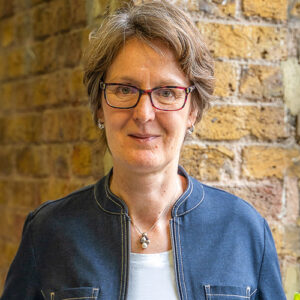
For Amanda Powell-Smith, CEO of Forster Communications, which has annual revenues of around £3m and a core team of 23, the aim is “being the best” rather than taking over the world. It took her “quite a long time” to see being a small, progressive business as “our superpower”: agile enough to try things and “ask the impossible” in ways larger organisations often can’t.
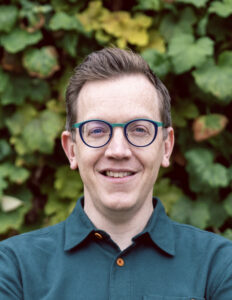
Jon Berry, Managing Director of Tyler Grange, has grown the business to 130 people, but measures success on three fronts: environmental, people and financial. “Unless all three are thriving, your business probably isn’t.” He points to competitors with “incredible turnover and profit margins” but “a huge turnover of staff”.
Listen to the episodes:
 Jo Colman
 Amanda Powell-Smith
 Jon Berry
2. How do you talk about sustainability without overclaiming?
Greenwashing and greenhushing come up repeatedly, but the deeper question is trust: how do you earn the right to be believed? For these guests, the answer is evidence people can check for themselves.
Ali Peck, former Head of Communications and Engagement at the London Pensions Fund Authority, explains that the LPFA puts its holdings online so anyone can check its net zero commitment against what it’s actually invested in, because otherwise “people look at you and say, well, you’re just saying this, you’re not actually proving it.”
Andy Bedwell, Owner and MD of Point of Difference Workspace, is wary of overplaying small initiatives. His approach is to “be clear what we are going to do, then do it, and then show people what we’ve done.”
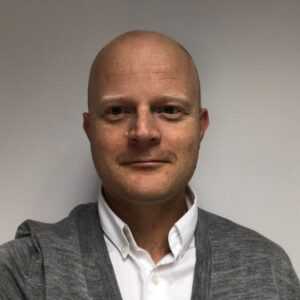
When greenwashing in product listings became a concern, Darren Aston, MD of Aston & James, an office supplies business, had his team check the data behind more than 20,000 office products and create an “A&J-approved” list explaining why each one qualifies. It started at 800 products and now stands at around 5,000.
Listen to the episodes:
 Ali Peck
 Andy Bedwell
 Darren Aston
3. Can business change the system, and is there reason for hope?
Guests swing between hope and concern, and most look beyond business alone.
Tom Cotter, Founder and CEO at OCEANR, admits it depends what day you ask him: he goes “from really pessimistic to quite… supportive and optimistic”.
Daniel Ward-Murphy, Marketing Director at Circular Computing, sees reason for hope in DEFRA signing off up to 34,000 of Circular Computing’s remanufactured laptops. He argues that “it’s difficult to get people to become pioneers, but it shouldn’t be difficult to get them to be in the Peloton”.
Emma Wellstead, Founding Partner of Warwick Events, points to the emperor penguin: competitors who “huddle together” to survive the winter, before it’s “every penguin for himself” again. Her own industry, she says, is “very siloed”, and needs to start coming together in the same way.
Listen to the episodes:
 Tom Cotter
 Emma Wellstead
4. Can purpose and profit really be balanced, or do you have to choose?
Views differ on whether it’s a balance, a trade-off, or a matter of timescales.
Douglas Hansen-Luke, Founder and Executive Chair of Future Planet Capital, believes that “if you get it right… you make the outsized venture returns, and you do good at the same time.”
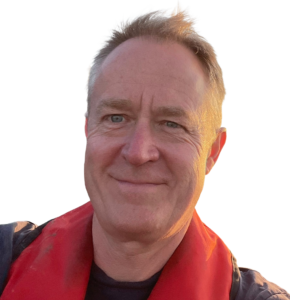
Others see a trade-off. Sarah Jordan, Founder & CEO of Y.O.U. Underwear, argues you have to prioritise one or the other, and Will Silverwood, former Head of Sustainability at Whitbread, sustainability proposals can involve compromise, because “ultimately we have to trade, and we have to trade profitably”.
For James Rutter, Chief Strategy Officer at COOK, it’s about timescales: you can accept short-term setbacks on your goals for the sake of the longer-term outcome.
Listen to the episodes:
 Douglas Hansen-Luke
 Sarah Jordan
 Will Silverwood
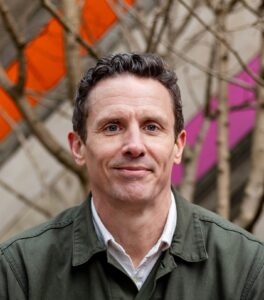 James Rutter
5. When it comes to clients, suppliers and partners, who should you work with, and when should you walk away?
Engage or disengage is a recurring dilemma, and so is a business’s responsibility for what happens along its supply chain.
Dean Connelly, Founder of Latte Recruitment, signed the Clean Creatives pledge, which meant dropping some clients and saying no to almost every global network agency, while Josh Pitman, Managing Director of Priory Direct, counts fast fashion brands amongst his customers, because his business makes their supply chains less harmful.
Geoff Hucker, CEO of Work for Impact, started out “pretty militant”, turning away two out of three potential clients, until two women running a women-led organisation in India gave him “a real talking down”. He now works with organisations that are “on a bit of a journey”, while still saying a “straight no” to any he sees as harmful.
Listen to the episodes:
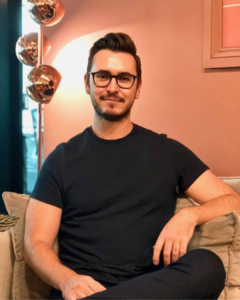 Dean Connelly
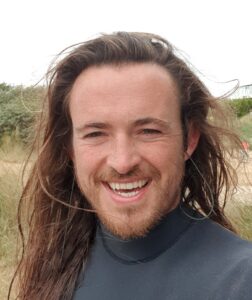 Josh Pitman
 Geoff Hucker
6. Ownership, investment and the flow of capital are powerful levers: who owns the business, and where does the money go?
The ownership of a business, how it’s governed and where its money goes shape everything it can do. Kim Wilson, Founder and MD at North South Wines, is approached by private equity companies every day, and turns them down because of what she fears selling would do to the company’s culture.
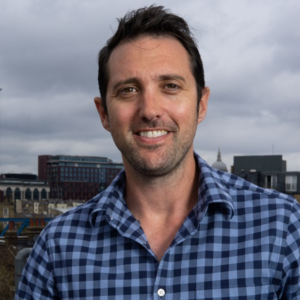
When its founder wanted to exit, Charity People’s Managing Director, Nick Billingham, steered the business into an employee ownership trust. His advice to others is to ask: “Is our current structure fit for purpose?”
Tom Cox, Founder and MD of Decent Energy, warns that investors now want to know sustainable solutions are commercially viable: “Sustainability needs to wash its face.”
Listen to the episodes:
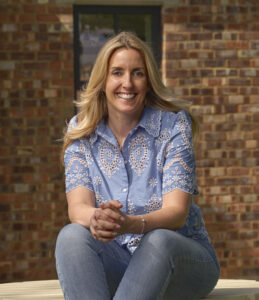 Kim Wilson
 Nick Billingham
 Tom Cox
7. How do you take sustainability beyond the people who already ‘get it’?
Many guests argue that people and businesses already committed to sustainability must get out of their bubble to understand what the barriers to engagement may be. Others point out that customers don’t need to share your values to buy from you.
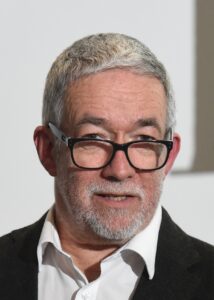
Phil Korbel, Co-Founder of The Carbon Literacy Project, argues that we have to break out of the “eco-ghetto” and get everyone on board. His approach is to make climate action relevant to people’s own jobs, workplace and sector.
Martin Knowles, Co-Founder of Sales Untangled, worries that some people have become so passionate about sustainability that “it’s become almost like a dogma”, polarising and putting people off rather than nudging and encouraging them.
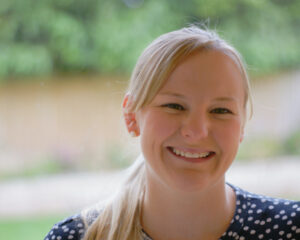
Michelle Miles, Founder of the Sustainable Wedding Alliance, admits that, like most people in sustainability, she’s “in a bit of an echo chamber”. For the wedding businesses she works with, she says, “a jargon free, non judgmental, clean and simple approach is what we need.”
Adrian Sell, Chief Executive of Oxford Wood Recycling, describes two customers who came in to buy wood for a building project at home. They “had no clue we were a charity” – they came because the wood was right for the job and good value.
Listen to the episodes:
 Phil Korbel
 Martin Knowles
 Michelle Miles
 Adrian Sell
8. What does purpose mean for the people in your business?
Purpose isn’t only something a business does for the world, it’s also something its people have to deliver and it can wear them down.
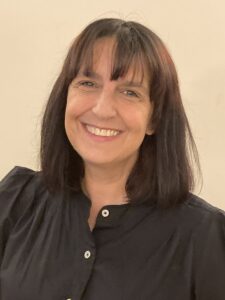
Karen Cripps, Associate Professor at Oxford Brookes Business School, describes the heavy emotional toll on people charged with delivering sustainability goals, and makes the case that “every job is a green job”.
Rachel Foster, Director at The Agile Communications Agency, advises us to “put your oxygen mask on first”, because you can’t do brilliantly for the planet if you’re not well yourself.
At Junxion Strategy, Adam Garfunkel, Chief Impact Officer, describes how the whole team built the company’s values and guiding principles from the bottom up, so that everyone can see their own story reflected in how the business works.
Listen to the episodes:
 Karen Cripps
 Rachel Foster
 Adam Garfunkel
In the articles that follow, I’ll examine each of these questions in more detail, looking at what they mean for the people leading a business, and how marketing and communications can be effectively deployed to support the business’s aims.
To get each article in your inbox, just follow this newsletter.